
Types of Roof Trusses
Types of Roof Trusses: A Complete Guide for Colorado Builders
There are a wide variety of different truss types out there, each designed to meet a different structural engineering need or aesthetic function.
At Rigid Component Systems, we have been building custom-engineered wood roof trusses in Longmont, Colorado since 1974. In that time, we have manufactured just about every truss type imaginable — from simple fink trusses for production homes to complex custom profiles for government structures and mountain market builds.
This guide covers the most common roof truss types used in Colorado residential, commercial, and agricultural construction, with notes on when each one makes sense and what to consider when specifying them.
Roof Truss Guide
Most Common Truss Types
These ten truss types cover the vast majority of residential, commercial, and agricultural builds in Colorado. Not sure which fits your project? Ask our design team.
King Post
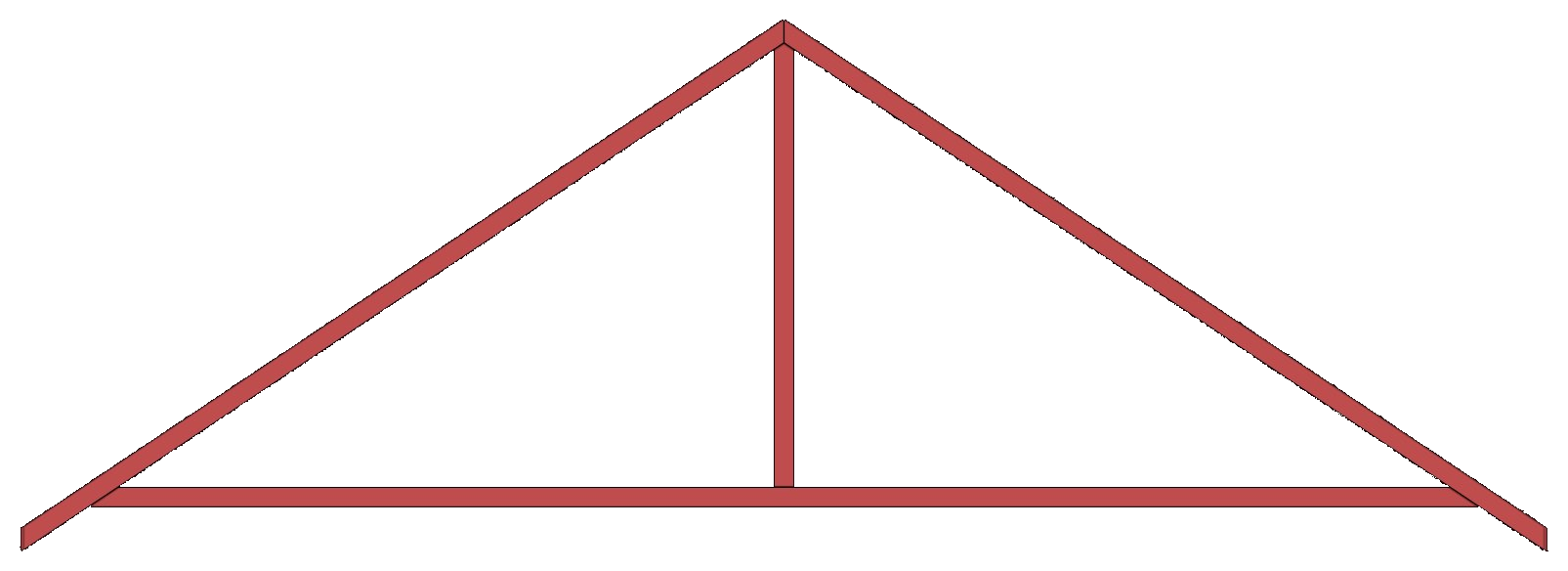
The simplest truss — a triangle with a single vertical center post connecting the apex to the bottom chord. Suitable only for short spans.
Why builders choose it
Most economical truss available. Used for small garages, sheds, and short-span applications typically under 20 ft.
Queen Post
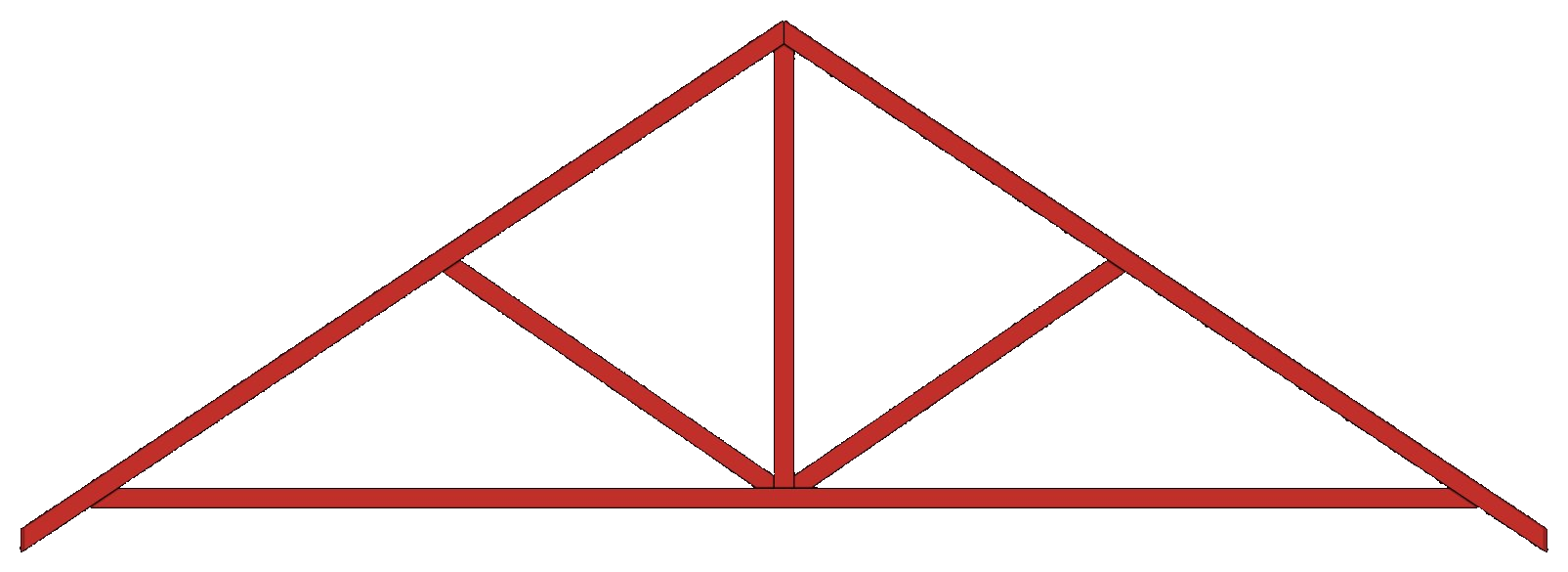
Two vertical posts connected by a horizontal tie beam, forming a rectangular open panel in the center. Handles medium spans beyond what a king post can cover.
Why builders choose it
Steps up from the king post for spans of 20–30 ft. Common in agricultural buildings and simple residential where the ceiling stays open.
Fink Truss
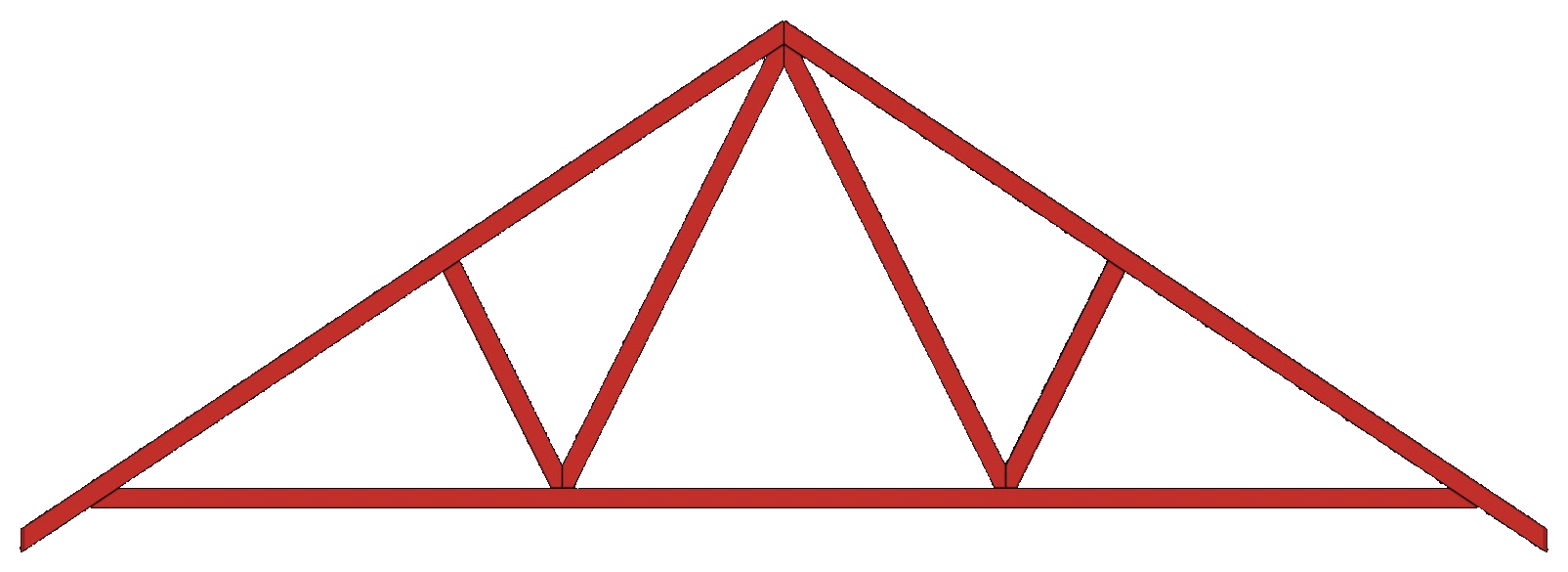
The most widely used truss in North American construction. Its W-shaped web distributes loads efficiently from ridge to bearing walls across most residential spans.
Why builders choose it
The default choice for any standard gable roof. Cost-effective, fast to install, and understood by every framing crew.
Howe Truss
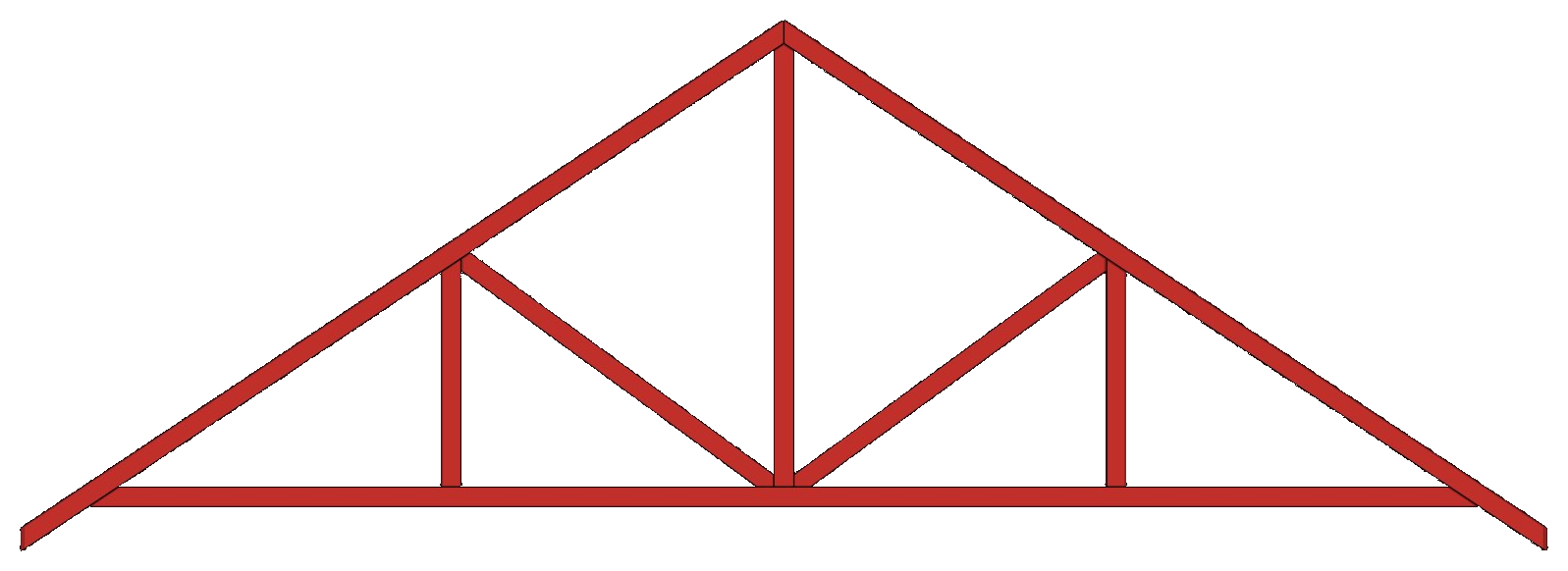
Similar outer shape to the Fink but uses verticals at the third-points with diagonals that fan outward toward the bearings — the reverse of the Fink's W pattern.
Why builders choose it
Performs well under heavy loads and steeper pitches. Regularly used in commercial and agricultural builds where added rigidity matters.
Mono Truss
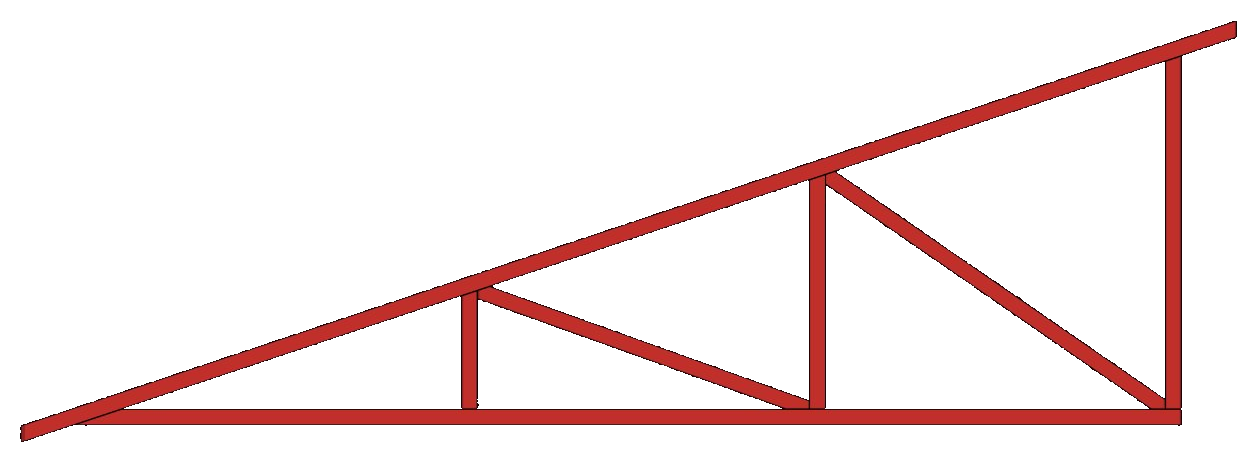
A single-pitch truss spanning from a high bearing on one side to a low bearing on the other. Creates a shed or lean-to roof profile with one sloping surface.
Why builders choose it
Essential for home additions, covered patios, lean-to structures, and agricultural lean-tos. Also used in contemporary single-slope roof designs.
Flat Truss

Top and bottom chords run parallel and horizontal, creating a flat or very low-slope roof profile. Multiple alternating vertical and diagonal webs carry loads between the chords.
Why builders choose it
Used in commercial, multifamily, and industrial buildings with flat roofs. Allows rooftop mechanical equipment and simplifies drainage design.
Scissor Truss
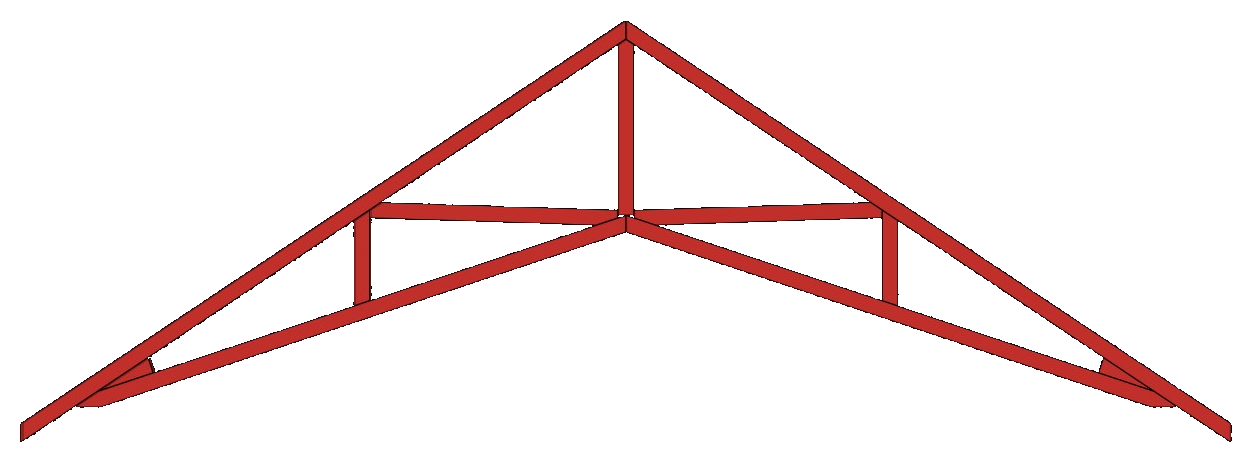
Creates a vaulted interior ceiling while maintaining a standard pitched roof outside. The angled bottom chord is built into the truss — no separate ceiling framing required.
Why builders choose it
Adds dramatic volume to great rooms and mountain builds without a full second story. Eliminates ceiling framing labor compared to stick-framing a vault.
Attic Truss
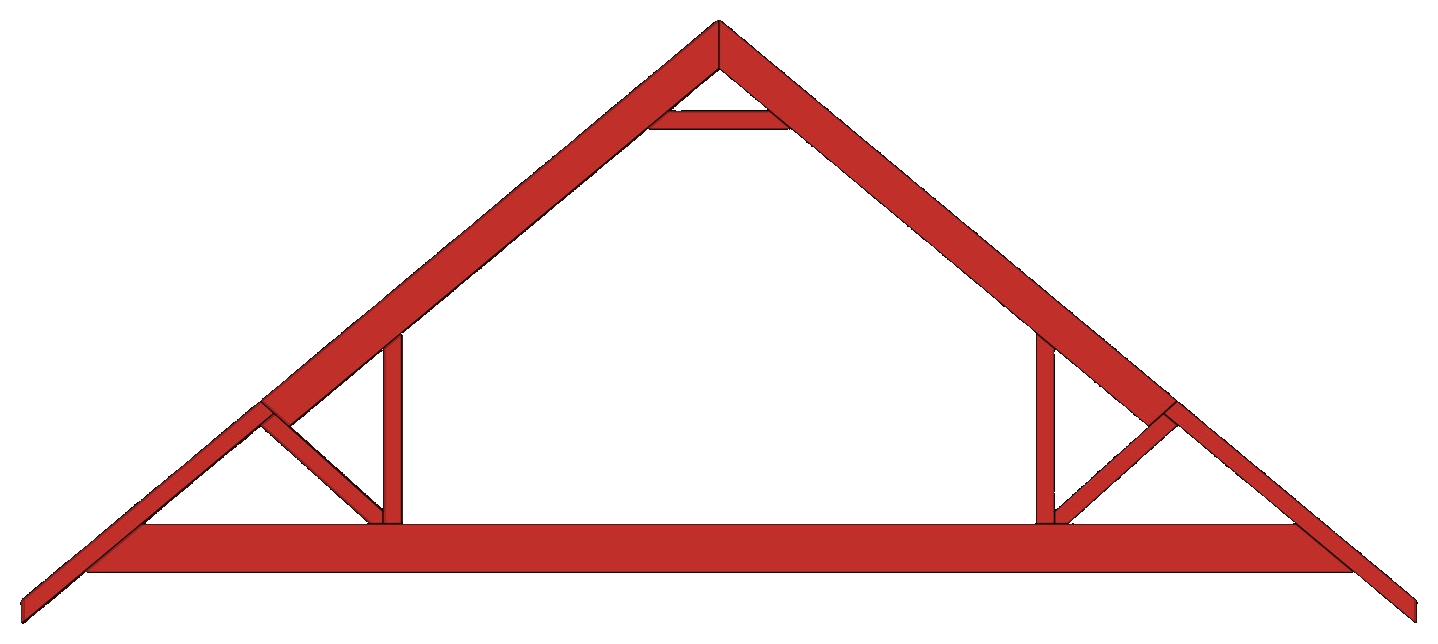
Carries both roof and floor loads simultaneously, creating a usable room within the roof cavity. Knee walls and a horizontal floor chord form the room space, engineered to habitable floor-load requirements.
Why builders choose it
Adds a bonus room, office, or storage space without increasing the footprint. Popular over garages and in custom homes — often more cost-effective than a full second-story addition.
Gambrel Truss
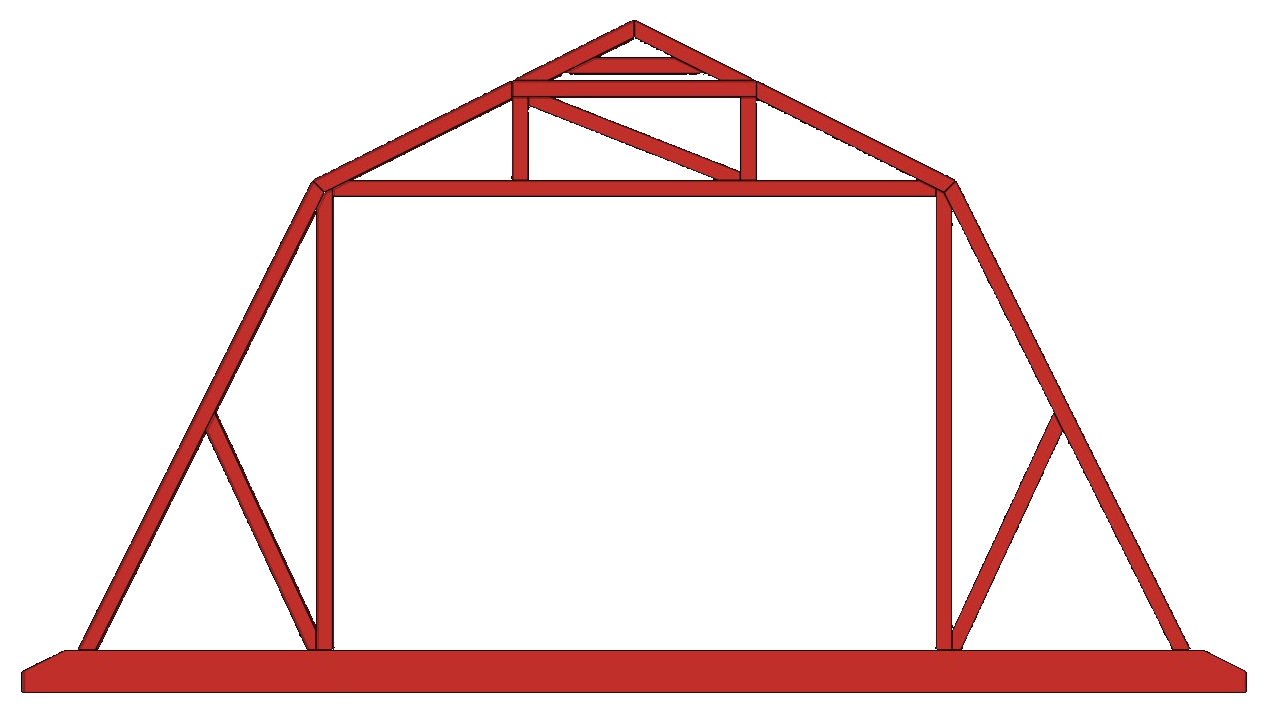
The classic two-slope barn profile — a steep lower pitch transitioning to a shallower upper pitch on each side. Maximizes usable interior volume within the roof cavity.
Why builders choose it
The standard choice for barns, pole buildings, and agricultural storage across Colorado's Eastern Plains. The extra interior height is valuable for hay, equipment, and loft storage.
Cathedral Truss
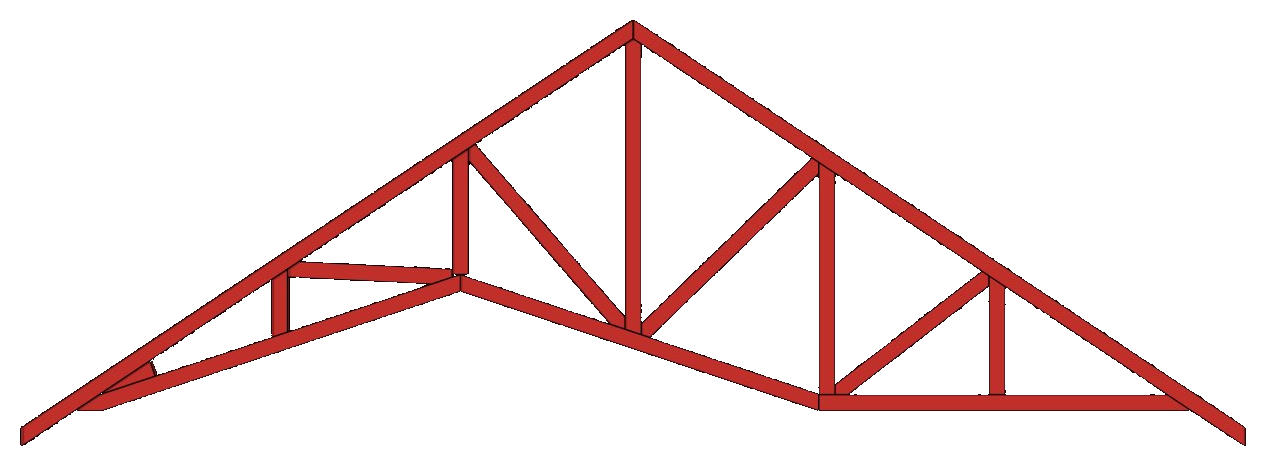
Designed to be architecturally exposed — the truss itself is the design feature. An open bottom chord with a raised tie creates the dramatic vaulted profile used in churches, lodges, and great rooms.
Why builders choose it
Specified where exposed structural elements are part of the interior design intent. Popular in Colorado mountain lodges, event centers, churches, and upscale custom homes.
Not sure which truss is right for your project?
Our design team reviews plans at no charge before quoting. Call (720) 652-4808 or send us your plans.
